Adaptation, urban cooling, water security, and energy-efficient solutions are playing an increasingly prominent role in European climate policy. In her State of the Union address on 16 September, Ursula von der Leyen, President of the European Commission, announced several new initiatives directly related to the future of the built environment.
The extreme weather events of summer 2026 once again highlighted Europe’s vulnerability. According to figures cited in the speech, heatwaves were linked to more than 35,000 excess deaths, while Europe is warming twice as fast as the global average.
The European Commission is therefore preparing several new measures. These include the European Heatwave Plan, which will focus on early warning systems, health preparedness, urban adaptation and cooling. In addition, a new climate resilience framework is being developed, under which Europe’s 100 most vulnerable regions will be identified and the associated risks assessed. The plans also include a new European water initiative and the Climate Insurance Alliance, aimed at improving insurance coverage for damage caused by extreme weather events.
What could this mean for design?
The announcements currently primarily indicate the future direction of European policy. While no specific funding opportunities have yet been announced, they clearly highlight the engineering fields that are likely to play an increasingly important role in climate adaptation.
- Building services and energy-efficient cooling:
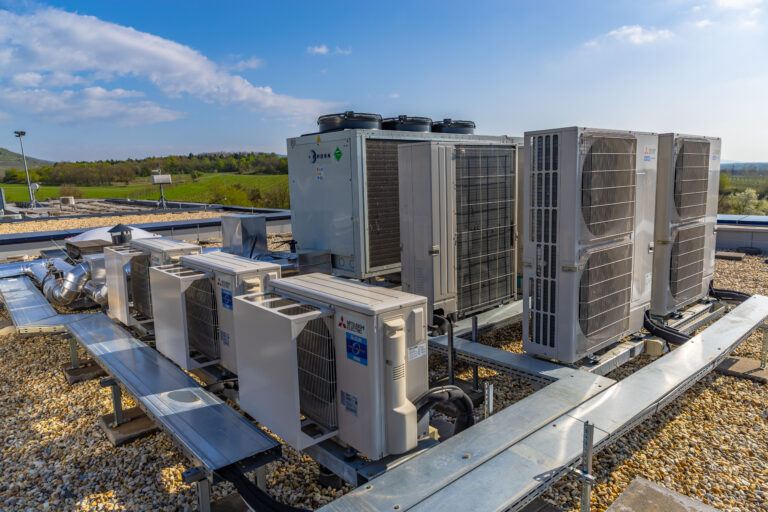
Due to increasingly extreme summer heat, ensuring adequate cooling and maintaining indoor comfort are becoming ever more important design considerations. Passive and active cooling systems, heat recovery ventilation, night cooling, and even ground heat exchanger solutions can all help buildings adapt more effectively to changing climatic conditions. - Water management and external utilities:
Water security is also a key focus of the new European policy directions. In urban infrastructure, this may involve retaining rainwater locally, ensuring appropriate sizing of water networks, and using available water resources more efficiently. Stormwater retention systems, drainage solutions linked to permeable surfaces, and the reuse of greywater for irrigation are all areas of design that could become increasingly important elements of climate adaptation. - Risk assessment through modelling from the design stage:
Comfort and thermal modelling can be used as early as the design stage to assess the expected heat load of a building or area, the risk of summer overheating, and the potential impact of different interventions. Urban heat island analyses and building energy comfort models can therefore support not only the selection of appropriate technical solutions, but also the assessment and mapping of climate-related risks.
Preparing for a changing environment
European initiatives will become more clearly defined over the coming period. However, the direction is already taking shape: buildings and urban infrastructure need to be not only energy-efficient, but also more resilient to extreme weather conditions.
Körös-Consult supports projects requiring the coordinated application of building services engineering, utility design, energy solutions and modelling through a comprehensive engineering approach.
Contact our experts for climate adaptation or energy-related design projects.